Industrial facilities depend on reliable electric motors to operate pumps, compressors, fans, conveyors, and other essential equipment. In high-power applications, motor selection influences energy consumption, production reliability, maintenance costs, and operational safety. Engineers must therefore evaluate the electrical supply, mechanical load, operating environment, and maintenance requirements before choosing a motor for a new installation.
High-voltage AC motors are commonly considered for industrial systems that require substantial power. However, the right solution depends on the complete application rather than voltage rating alone.
Understanding High-Voltage AC Motors
High-voltage AC motors convert electrical energy into mechanical motion. They are used in industrial installations where equipment demands can justify high-voltage power distribution and appropriately engineered motor-control systems.
The motor’s voltage rating must match the electrical system and the requirements of the driven equipment. Other important factors include rated power, speed, torque, starting method, frequency, efficiency, and duty cycle.
An engineer should also distinguish between the motor’s rated operating conditions and temporary conditions such as starting, acceleration, overload, or abnormal supply voltage. These factors influence equipment selection and protection settings.
What Does YKK Refer To?
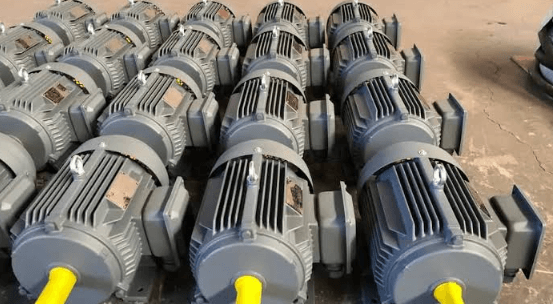
YKK is a designation used for certain high-voltage motor designs and configurations. Buyers should confirm the precise meaning of the designation in the manufacturer’s current documentation, since frame arrangements, cooling methods, protection levels, and construction details may vary across product ranges.
The designation alone does not provide enough information to approve a motor for a specific project. The technical datasheet and drawings should establish the motor’s dimensions, electrical characteristics, cooling arrangement, mounting configuration, and environmental suitability.
Rated output and speed
Motor output should be selected according to the driven machine’s actual power requirements. Oversizing can increase initial cost and may affect operating efficiency under certain load conditions. Undersizing can lead to excessive heating, inadequate torque, and premature failure.
Rated speed should also match the application. Pumps, fans, compressors, and other machines may have different speed requirements, and the relationship between motor speed and driven-equipment performance should be assessed during design.
Starting requirements
Large motors may draw substantial current during starting. The selected starting method should be compatible with the electrical supply, mechanical load, and process requirements. Engineers should consider acceleration time, permissible voltage drop, and the impact of starting torque on the driven machine.
Efficiency and Energy Management
Energy consumption is a major operating cost in facilities that run large motors for extended periods. Motor efficiency should be assessed at realistic operating loads rather than by comparing nameplate ratings alone.
Operating profile
A motor that runs continuously at a stable load may have different optimisation priorities from equipment that starts and stops frequently. Engineers should review daily operating hours, load variation, process conditions, and opportunities for speed control.
System-level efficiency
The motor is only one component of the complete drive system. Couplings, gearboxes, pumps, fans, control equipment, and mechanical alignment can all influence total energy use. Improving the entire system may provide more meaningful savings than changing the motor alone.
Maintenance and efficiency
Poor alignment, worn bearings, contamination, and cooling problems can reduce reliability and contribute to unnecessary energy losses. Routine inspection helps identify developing issues before they cause extended downtime.
Cooling, Enclosure, and Environmental Protection
High-voltage motors must be suitable for their installation environment. Dust, humidity, corrosive atmospheres, ambient temperature, and ventilation conditions can influence the required enclosure and cooling arrangement.
The selected motor should have an appropriate ingress-protection rating and cooling configuration for the site. Outdoor installations may need additional measures against weather exposure, while dusty or corrosive environments may require specialised protection.
Engineers should also consider altitude and ambient temperature because these conditions can influence cooling performance and permissible loading. Site-specific requirements should be included in the motor specification.
Installation and Electrical Protection
Correct installation is essential for safe and reliable operation. Electrical connections, grounding, cable selection, protection coordination, and commissioning procedures should follow applicable standards and the manufacturer’s instructions.
Foundation and alignment
The foundation must support the motor’s mass and operating forces. Alignment between the motor and driven equipment helps reduce vibration, bearing stress, and coupling wear.
Protection systems
Motor protection may include overload protection, short-circuit protection, temperature monitoring, and other devices selected for the system. The design should address expected operating conditions and foreseeable faults.
Commissioning
Before regular operation, technicians should verify electrical connections, insulation condition where applicable, mechanical alignment, lubrication, rotation direction, and protective-device settings. Initial vibration and temperature readings can provide a useful baseline for future maintenance.
See also: Tech Yugle Network: Techyugle.Com
Procurement and Supplier Evaluation
A detailed request for quotation should include the required voltage, output, speed, frequency, mounting arrangement, cooling method, enclosure rating, duty cycle, site conditions, and applicable standards.
Buyers should also request technical drawings, efficiency data, installation instructions, spare-parts information, and warranty details. The product information for motorxc ykk motor can be reviewed during supplier evaluation. Confirm the current configuration, available ratings, delivery schedule, and documentation directly with the supplier.
Frequently Asked Questions
1. What factors matter most when selecting a high-voltage motor?
Rated power, voltage, speed, torque, load profile, cooling, enclosure protection, starting requirements, and the operating environment should all be considered.
2. Why is motor efficiency important?
Electricity is a significant lifetime cost for equipment operating over long periods. Comparing efficiency under realistic load conditions can help estimate operating expenses.
3. What should be checked before commissioning?
Technicians should follow the approved commissioning procedure, including electrical checks, grounding, alignment, lubrication, protection settings, and verification of safe rotation and operating conditions.
Conclusion
Selecting a high-voltage AC motor requires a complete assessment of electrical, mechanical, environmental, and operational requirements. Careful sizing, suitable protection, correct installation, and planned maintenance contribute to reliable performance. Reviewing verified technical documentation with the supplier helps ensure that the selected configuration meets the project’s actual needs.