Water exposure can affect the performance and service life of products used in manufacturing, transportation, electronics, and outdoor applications. In some environments, ordinary splashing is not the primary concern. Products may face concentrated water jets during cleaning, maintenance, or routine operation, placing greater demands on their housings, seals, and protective interfaces.
For manufacturers, evaluating resistance to these conditions is an important part of product validation. Controlled water jet testing helps engineers identify weak points, compare enclosure designs, and determine whether products meet defined environmental protection requirements. The quality of the evaluation depends on selecting an appropriate test method, controlling exposure conditions, and interpreting results against clear acceptance criteria.
Understanding Water Jet Testing
Water jet testing exposes a product to water delivered through specified nozzles under controlled conditions. Depending on the applicable test method, the procedure may define water pressure, flow rate, temperature, nozzle distance, spray angle, exposure duration, and the movement of the water source or test sample.
Each parameter contributes to the test’s severity. A change in pressure can alter the force of the water, while nozzle distance and direction influence how the jet reaches joints and exposed surfaces. Water temperature may also affect certain materials and sealing components.
The objective is not simply to direct water at a product. A meaningful test must reproduce the conditions required by the relevant standard or product specification. This makes it possible to compare samples and investigate whether design changes influence water resistance.
Water jet testing should also be distinguished from immersion testing and other environmental evaluations. A product that performs well under a particular spray procedure may still require separate testing for prolonged submersion, dust exposure, corrosion, or temperature variation.
Why Manufacturers Need Controlled Testing
Product enclosures often contain sensitive components that must remain protected from external moisture. These may include electronic circuits, sensors, electrical connections, motors, and control assemblies. Water entering through an enclosure seam or connector can interfere with operation, accelerate corrosion, or cause premature failure.
Controlled testing offers several practical benefits.
Identifying Weak Sealing Points
Water may enter through small openings that are difficult to identify during routine inspection. Potential weak points include cable glands, access panels, gasket interfaces, screw holes, and joints between different housing materials.
Testing allows engineers to observe whether these areas remain protected under the specified exposure conditions. If water enters, the findings can guide targeted design improvements.
Supporting Product Development
During product development, engineers often compare several enclosure designs or sealing arrangements. Repeating a controlled test under consistent conditions helps them determine which changes improve performance.
This process can reduce uncertainty before a design moves into larger-scale production. It also provides evidence for evaluating modifications to materials, fasteners, connectors, and housing geometry.
Maintaining Manufacturing Consistency
Even a well-designed product may experience inconsistent protection if assembly procedures vary. Differences in gasket placement, tightening methods, component tolerances, or seal condition can affect water resistance.
Testing representative samples can help quality teams identify recurring issues and assess whether manufacturing processes are producing consistent results.
Choosing Suitable Water Jet Testing Equipment
Equipment selection should begin with the product’s requirements rather than a general preference for high pressure. Different products need different exposure conditions, and not every test system supports every method.
When evaluating a LIB industry water spray jetting chamber manufacturers should confirm that its configuration supports the intended procedure. Important details include the available pressure and flow settings, water temperature control where required, nozzle arrangement, sample capacity, and the ability to reproduce specified exposure sequences.
Several factors deserve careful consideration:
- Standard compatibility: Confirm the test method and its required operating parameters before choosing equipment.
- Water delivery: Check whether the system can maintain the required pressure and flow conditions throughout the test.
- Nozzle positioning: Ensure that the nozzle arrangement and movement match the specified procedure.
- Sample dimensions: Verify that the chamber can accommodate the product without obstructing the required water exposure.
- Control and monitoring: Consider how operating conditions are adjusted, monitored, and recorded.
- Safety provisions: High-pressure water and potentially heated water require appropriate guarding, interlocks, drainage, and operator procedures.
- Maintenance requirements: Review routine cleaning, inspection, calibration needs, and service availability.
Repeatability is particularly important. If the equipment cannot maintain stable conditions, it may become difficult to determine whether a difference in results comes from the product or from the test setup.
Applications in Industrial and Commercial Environments
Electrical Enclosures and Electronic Assemblies
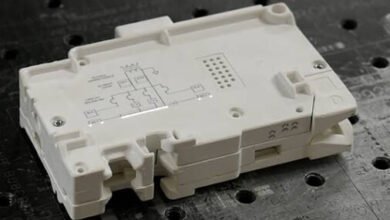
Electrical enclosures are designed to protect internal components against environmental conditions appropriate to their intended use. Water jet testing can help evaluate the protection offered by housing joints, cable entries, connectors, switches, and removable covers.
If a sample fails, engineers can inspect the affected area and determine whether the problem relates to seal compression, joint geometry, or an assembly issue. Additional electrical or functional checks may be needed to assess the effect of water exposure.
Automotive Components
Selected automotive components may encounter water during washing, maintenance, or operation in wet conditions. Sensors, connectors, lamps, and electronic modules can have specific environmental qualification requirements based on their intended installation.
The test should reflect the component’s actual specification. A result from one water jet procedure should not be interpreted as proof that the component can withstand every cleaning method or operating environment.
Industrial Machinery and Control Systems
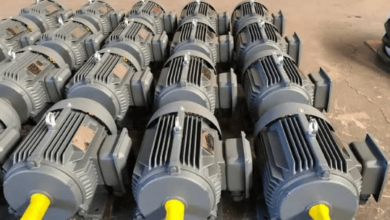
Industrial machinery may be cleaned regularly to maintain operational standards. Equipment used in these environments can include control panels, motor housings, and selected electrical assemblies that need appropriate protection from water.
Testing helps manufacturers evaluate whether the enclosure design is suitable for the intended cleaning conditions. It can also help maintenance teams and product developers assess revised housings or replacement components.
Products Used in Intensive Cleaning Environments
Some commercial and industrial products are exposed to repeated washdown procedures. In these cases, manufacturers must consider not only the initial water resistance of a new product but also the condition of seals and joints over time.
Where durability is a concern, water jet testing may be combined with ageing, thermal cycling, or other relevant procedures. The combination depends on the product’s expected service conditions and applicable qualification requirements.
Preparing Samples for Accurate Results
Sample preparation plays a major role in the reliability of a water jet test. Before testing, technicians should identify each sample, inspect it for damage, and confirm that it is assembled according to the manufacturer’s instructions.
Seals, fasteners, covers, and cable entries should be installed in the required configuration. If the procedure specifies that a product must be powered, positioned, or assembled in a particular way, these instructions should be followed precisely.
A baseline inspection is also useful. Depending on the product, technicians may record photographs, electrical measurements, functional results, or visible defects before exposure. This information provides a reference for post-test evaluation.
During the test, the sample should be secured without unnecessarily shielding the surfaces under examination. Technicians should verify the required settings and follow the specified sequence for nozzle position, exposure time, and water delivery.
Any departure from the procedure should be documented. Even small variations can influence the outcome, so records help determine whether the results remain suitable for comparison or formal qualification.
Interpreting Test Results
After exposure, the sample should be examined using acceptance criteria established before the test. The evaluation may include checking for water inside the enclosure, moisture around critical components, changes in electrical performance, or other product-specific indicators.
The significance of water ingress depends on the product’s design. Some enclosures may permit moisture in designated areas, while others require protection of sensitive internal components. The acceptance criteria must therefore reflect the intended use and applicable requirements.
If a sample fails, engineers should locate the entry point and investigate the likely cause. Potential problems include damaged gaskets, insufficient compression, uneven panel alignment, poor sealing around connectors, and gaps introduced during assembly.
Corrective actions may involve selecting a different sealing material, modifying the enclosure interface, improving assembly tolerances, or changing the fastening arrangement. The revised product should then undergo appropriate verification testing to confirm whether the change has addressed the problem.
A failed test can provide valuable information when the findings are recorded and investigated systematically. It helps teams move from assumptions to evidence-based design improvements.
See also: Ztec 100 Tech Hub: Ztec100.Com Tech
Integrating Testing Into a Quality Programme
Water jet testing is most effective when it forms part of a broader quality assurance process. Early in development, it can reveal weaknesses before the design is finalised. During product validation, it helps establish whether the design meets its defined requirements. In production, suitable sampling procedures can help identify inconsistencies between batches.
Test documentation should include sample identification, equipment settings, the applicable procedure, relevant observations, and the final evaluation. When a corrective action is introduced, teams should record the change and the method used to verify its effectiveness.
Manufacturers should also consider the limits of water jet testing. A successful result does not automatically demonstrate resistance to immersion, dust, chemical cleaning agents, corrosion, or long-term ageing. Other tests may be necessary to represent the complete operating environment.
A well-planned quality programme uses the relevant combination of tests rather than relying on a single result to establish every aspect of product durability.
Frequently Asked Questions
1. What is a water spray jetting chamber used for?
It is used to expose products to controlled water jets for evaluating water resistance under specified conditions. The exact test capabilities depend on the chamber’s design and the applicable test procedure.
2. What factors influence water jet test results?
Important factors can include water pressure, flow rate, temperature, nozzle distance, spray direction, exposure duration, and sample configuration. These parameters should follow the relevant standard or product specification.
3. Can water jet testing guarantee long-term waterproof performance?
No. The test demonstrates performance under its defined conditions and acceptance criteria. Long-term reliability may require additional testing for ageing, immersion, corrosion, temperature changes, or other environmental stresses.
Conclusion
Controlled water jet testing helps manufacturers evaluate enclosure protection, identify sealing weaknesses, and improve product reliability. Selecting suitable equipment, following a repeatable procedure, preparing samples correctly, and applying clear acceptance criteria are essential for producing useful results.
When testing findings are incorporated into design reviews and quality assurance, manufacturers can make more informed decisions about materials, sealing systems, and assembly methods. Combining water jet testing with other relevant environmental evaluations provides a stronger basis for assessing products intended for demanding operating conditions.